

With Revenue NSW in 2023 I helped design a fine diversion service that used messages, letters, QR codes and a web portal to allow people to prove they fixed a traffic issue they had been fined for, to get it downgraded to a warning.
This work won a Gold Australian Good Design Award.
Context
Fine diversions are a proven and effective way of helping vulnerable people in society avoid hardship by forgiving the debt and penalty of a minor fine if they commit to and prove behaviour change.
For someone who is homeless, escaping domestic violence, or in other vulnerable situations, every dollar matters. They will, rightfully so, prioritise a warm meal over paying a minor traffic fine. This often leads to snowballing debts and worsening hardship. When all a fine was meant to do was change someone's road behaviours, but it becomes the trigger for inescapable homelessness, something has gone wrong.
Revenue NSW wanted to tackle this, and had recently finished a manual pilot for a single fine diversion type — first-offence incorrect child seat installation (which is more often than not a mistake made in good faith). The pilot, run with NSW Police, was a success and they needed to figure out how to scale it up to the whole state, and out to other types of fines. I was on that pilot expansion team, with the challenge of taking something manual and valuable into leveraging existing systems and scaling to millions of people.
Service design
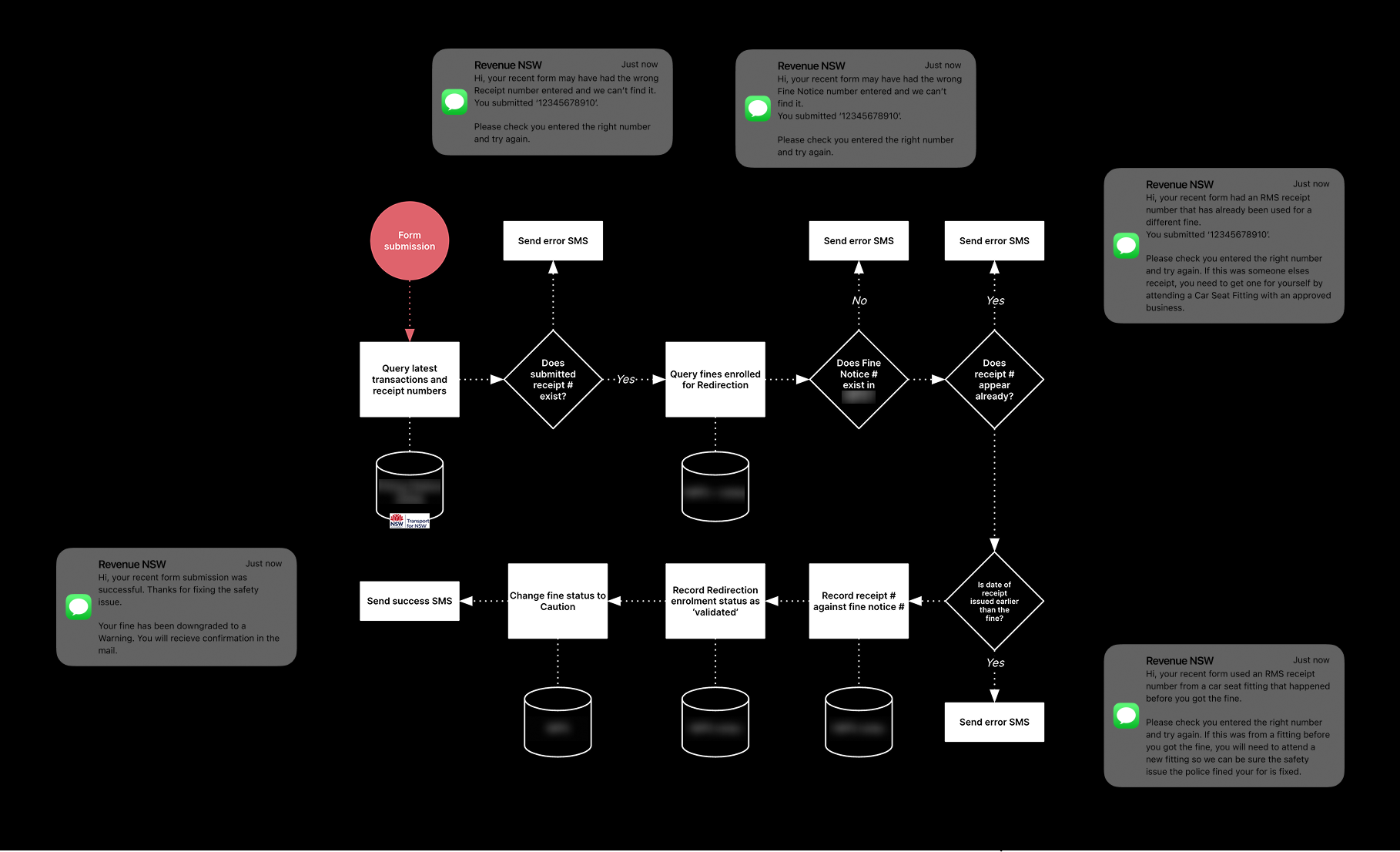
We designed a service that started when a new fine was recorded at the police station, taking into account their interplay between existing platforms, and triggering a 'Diversion' option for the fine recipient.
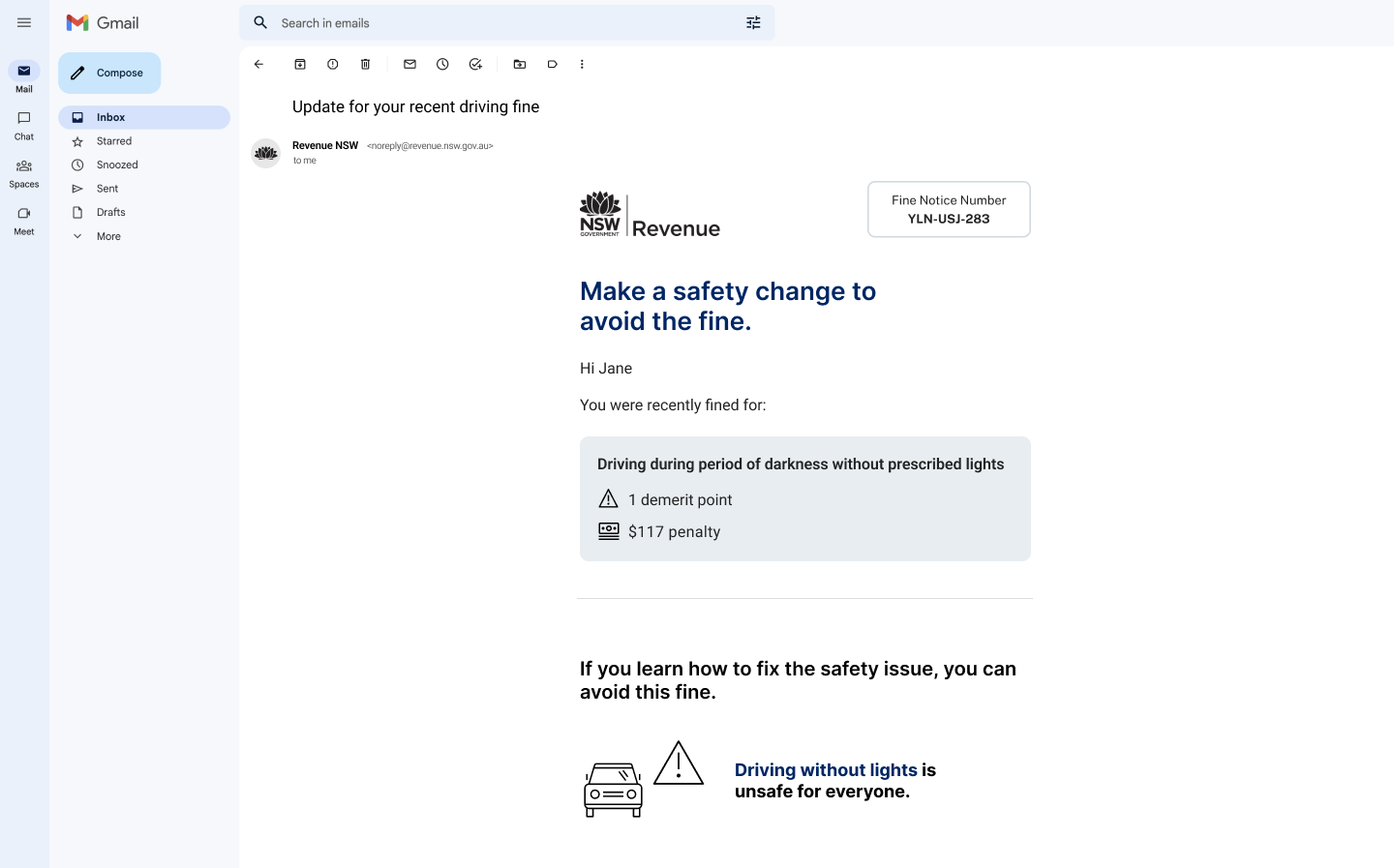
The customer would get notified by the best contact details we had for them, and given the option to go to a relevant provider to fix the issue behind the fine. This included a triage moment and the ability to book an appointment.
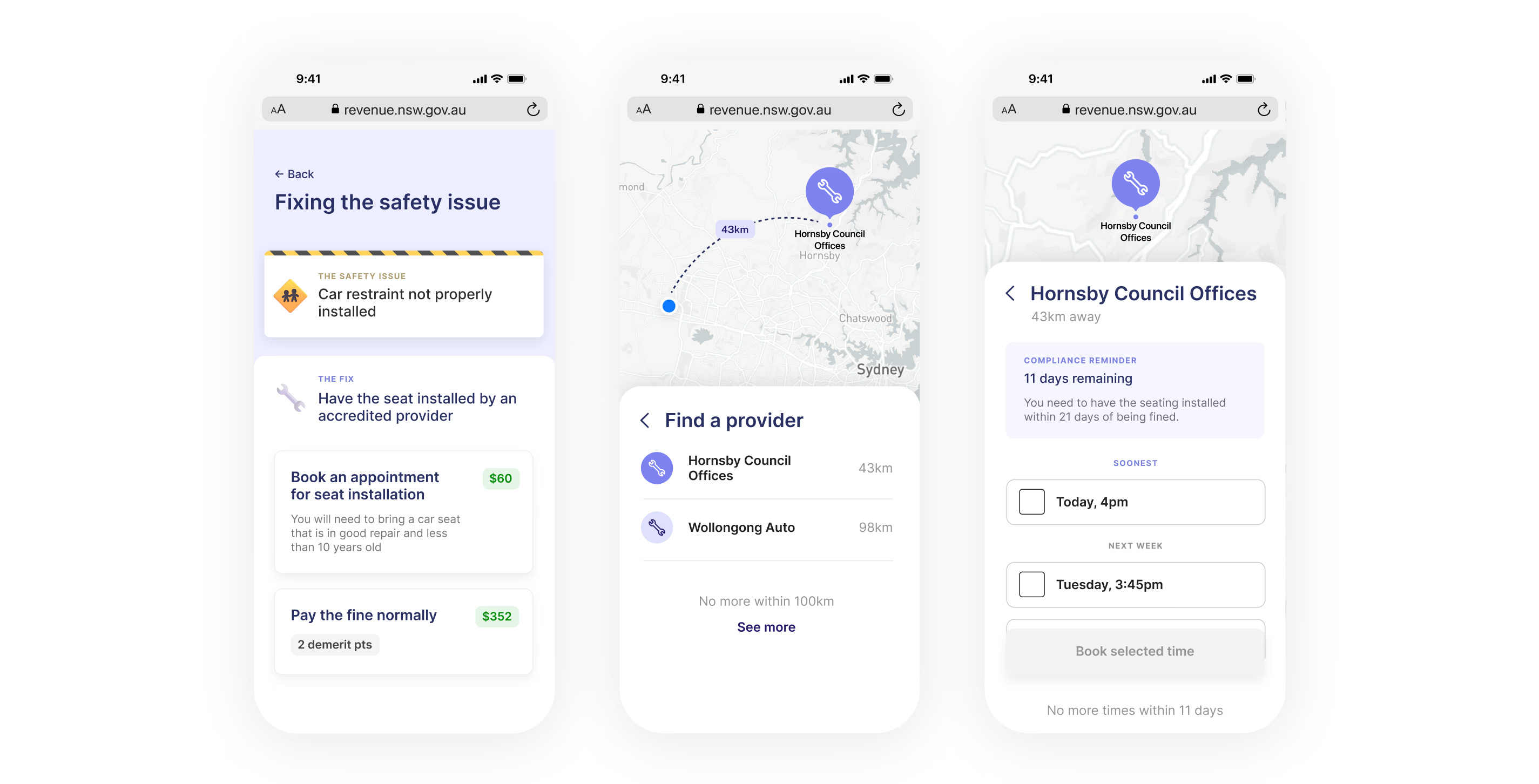
Physical and digital inclusivity
A really important part of designing for very vulnerable people is to consider their lack of access to things we often take for granted.
For various reasons, be they cultural, escaping violence, disability or financial hardship, the very people we were hoping to target with a service like this may not have access to a phone, a fixed address, or even feel safe going to a public library.
Making sure this pilot scaled to those who needed it most meant designing for every channel variety at every touchpoint, and being forgiving in deadlines, timeframes and expectations.
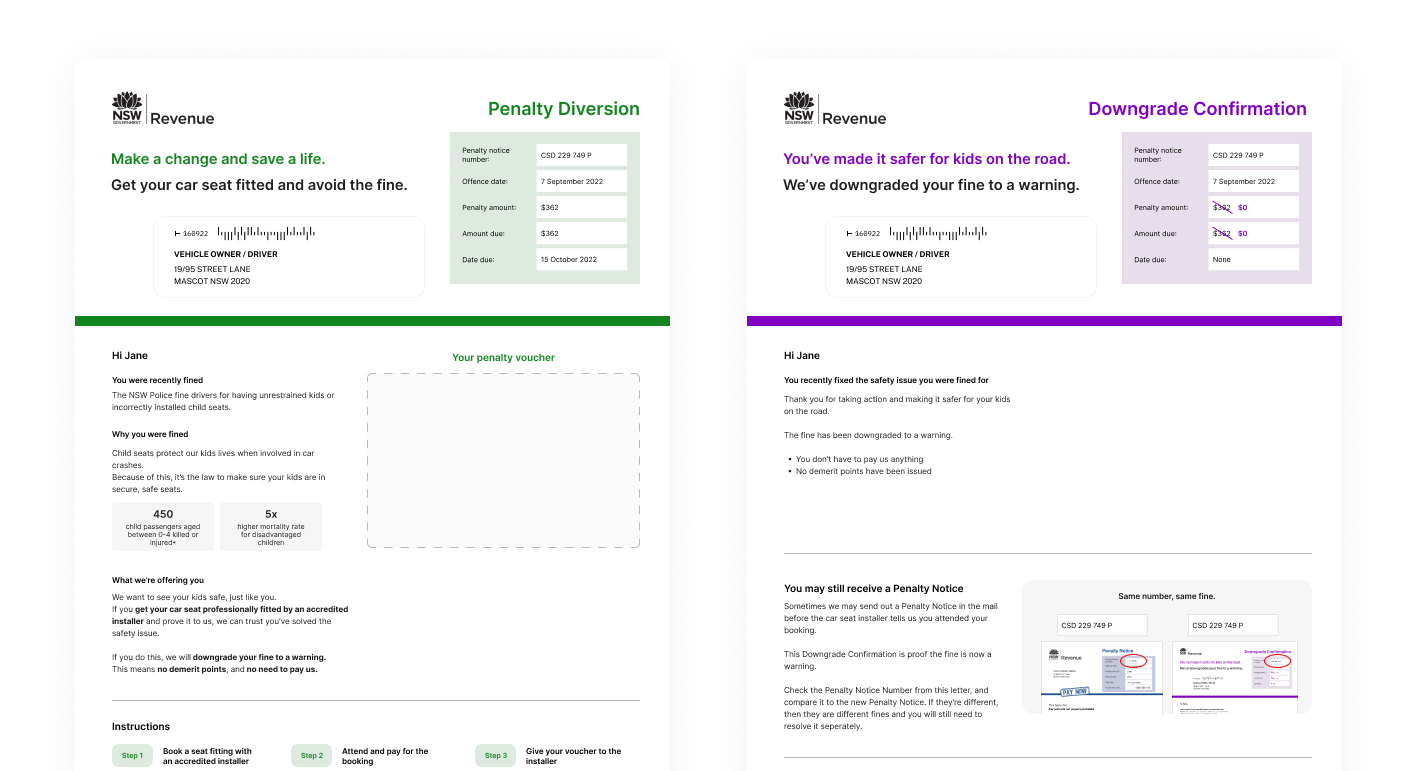
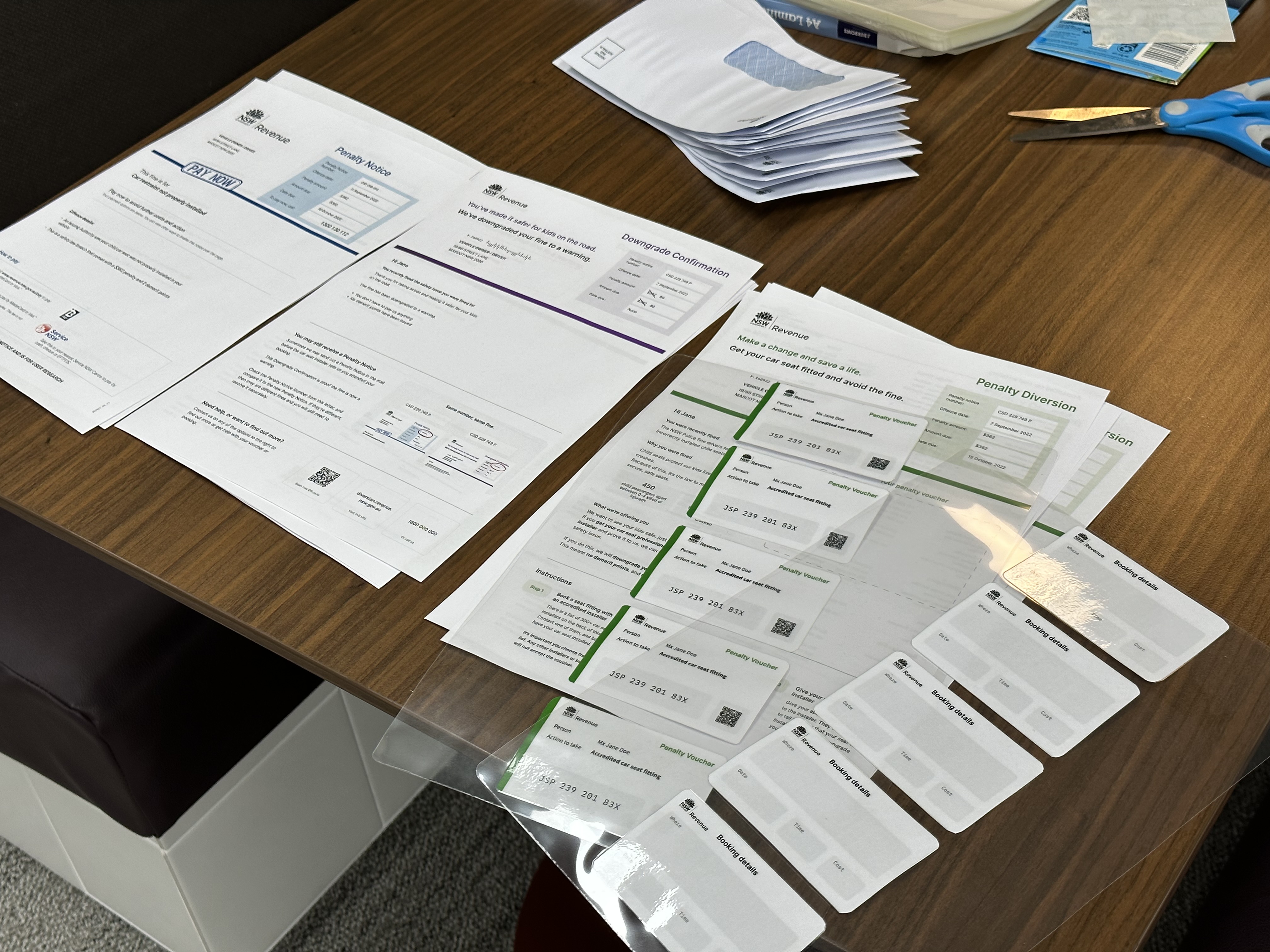
This translated into my designs through making sure that fine diversions were accessible in as many different formats as made sense, including entirely offline through letters, vouchers and physical submission.
Digital rollout strategy with QR codes
QR codes with unique values on the receipts and certificates were the verification of an issue fixed, and customers would scan them (or provide them to a Service NSW agent, or other potential organisations like community centres) to downgrade their fine to a warning.
In addition, we created a strategy for identifying new fines to prioritise rollout to and how they could technically come into the fold when the time was right.
The work of prioritising and building out new fine diversions is ongoing and is an integral part of the NSW MyFines product. Other diversions built with this approach include Early Drug Detection Initiative which saw a 6.4% diversion rate in 2024.
Learning
Firstly, money is core to interacting with society and for vulnerable people it's a difficult and traumatic subject that is often deliberately ignored despite consequences. Sometimes you must talk to people about their money, but if you focus the conversation on the inputs and outcomes (steps to take to resolve an issue, or benefits of solving an issue) you can, but not always, make that interaction more approachable. It's a delicate balance, and we aren't therapists and counsellors.
Secondly, in public services you can't assume everyone has a phone or even a fixed address. You need to be smart with the data you have and forgiving in timelines and delays when enforcing.

In collaboration with
- Kate Stone, Product Manager
- Sharon Bicknell, Design Strategy
- Sarah Ashman-Baird, Product Manager
- Emily Dao, Research
- Laura Ryan, Research & Strategy
- Emma Hickey, SME
- Karen Elder, SME